SystemsPERSUIT2026
Designing an AI agent lawyers would actually trust
Persi advises Fortune 500 legal teams on whether to keep a matter in house or send it to outside counsel. I led design from experimentation to beta — principles, content design, research, and the system components.
- My role
- Design lead — principles, content design, user research, design system
- Focus
- Product design, Design system, Strategy, AI
- Outcome
- 22 beta customers; a deciding factor in contract renewals
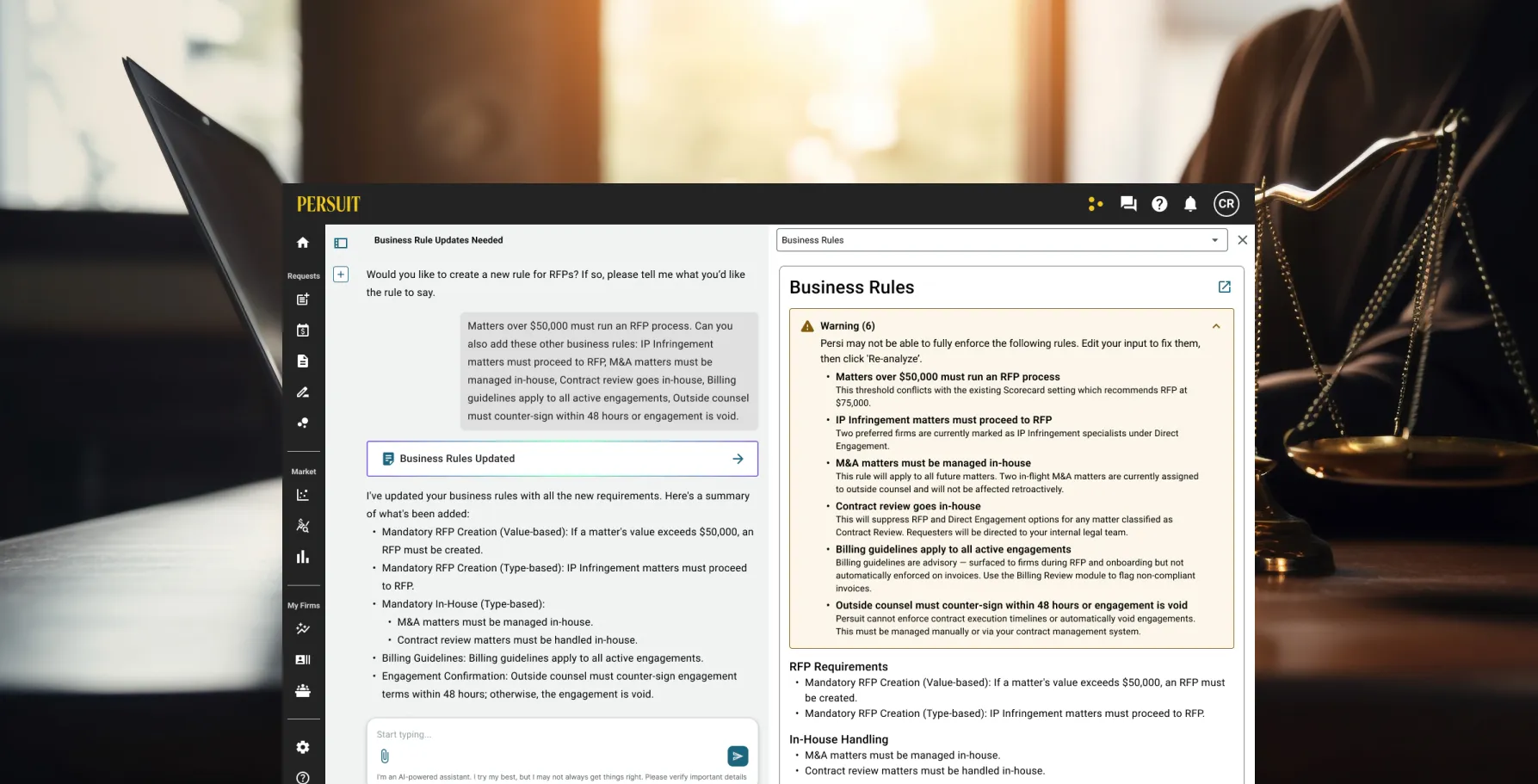
Context
Persi is PERSUIT’s legal operations agent. It helps Fortune 500 legal teams decide when to keep a matter in house versus hire outside counsel — weighing subject matter, size, geography, and cost.
I joined as design lead during experimentation, while the model and data architecture were still being worked out. Persi had to sit inside a platform users already knew: enough cohesion to feel like PERSUIT, enough distinction to signal a genuinely new kind of experience.
The key decision
Where the agent hands off to a human. An agent that never hands off frustrates people exactly when stakes are highest. One that hands off too readily never earns trust. Setting that line shaped everything downstream.
What I did
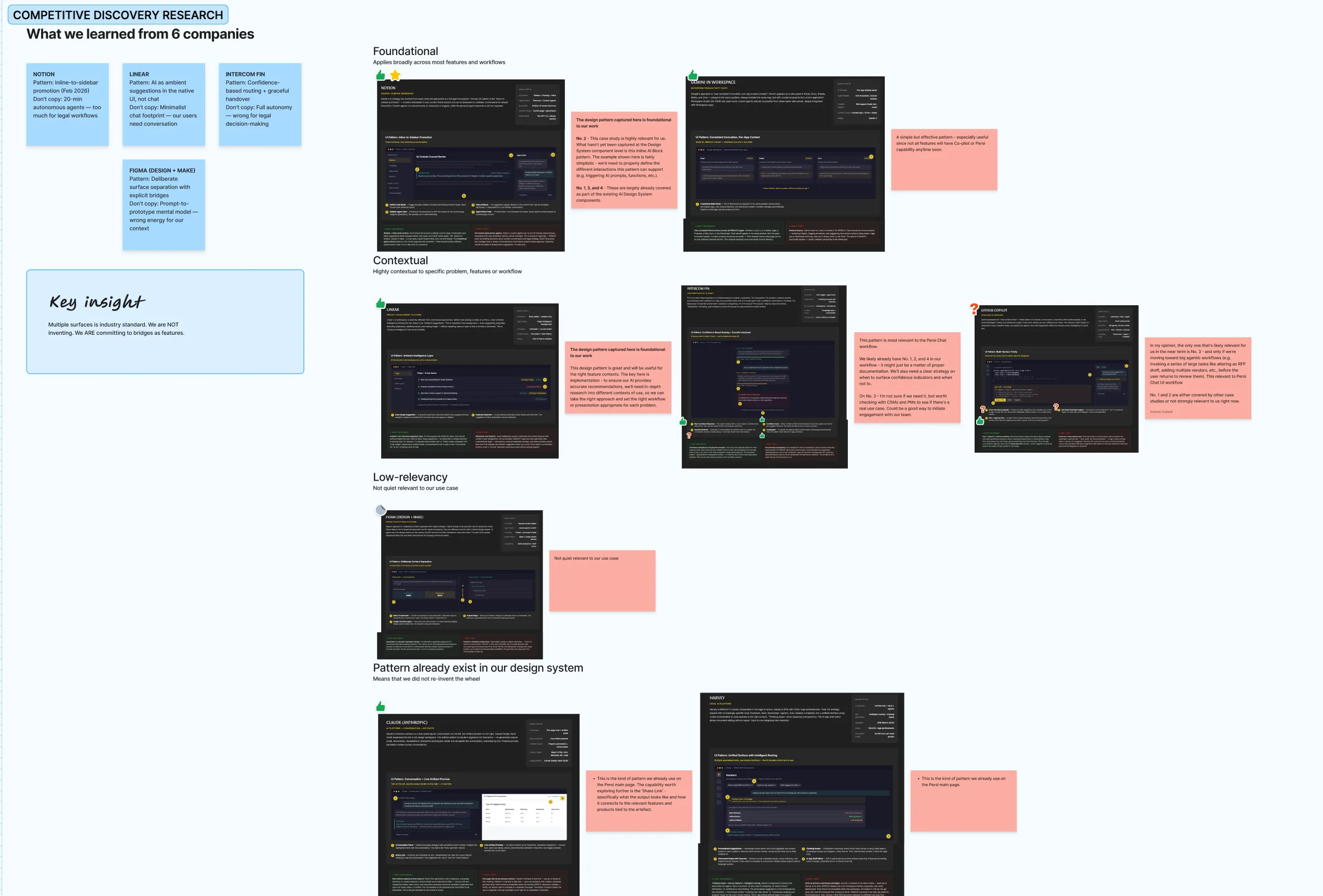
Grounded the team in evidence before setting principles. I ran competitive analysis across adjacent software and leading AI chat products, then shared it out. Without shared reference points, principle-setting becomes taste, and taste doesn’t scale.
Ran three workshops with 11–13 participants — PMs, engineers, architects, designers — covering memory, human intervention, and navigation between surface areas.
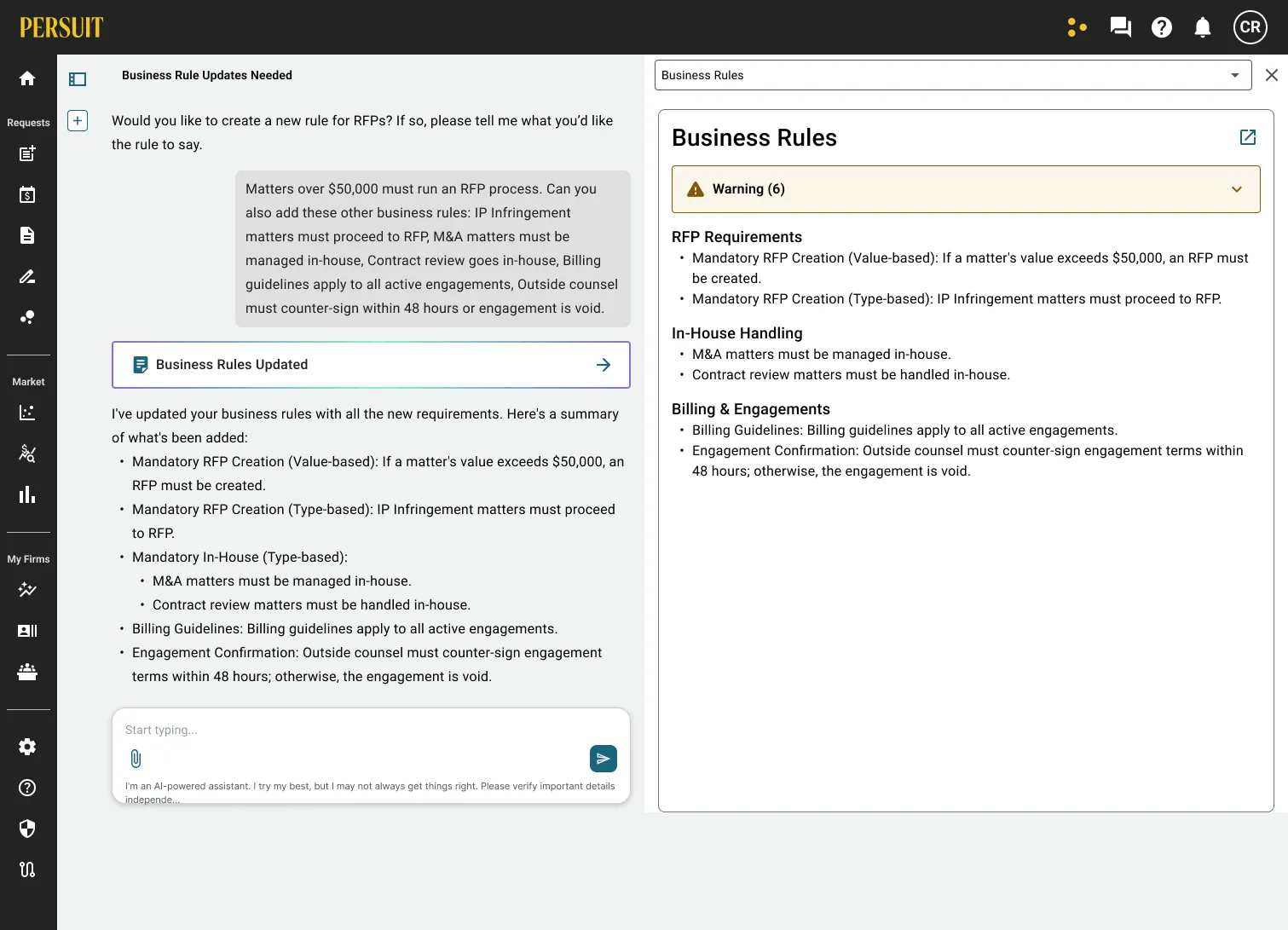
Introduced a palette and new components, evaluated with design system engineering leads for scalability and maintenance cost. Agent work surfaced needs the existing system didn’t have, so each addition had to earn its keep.
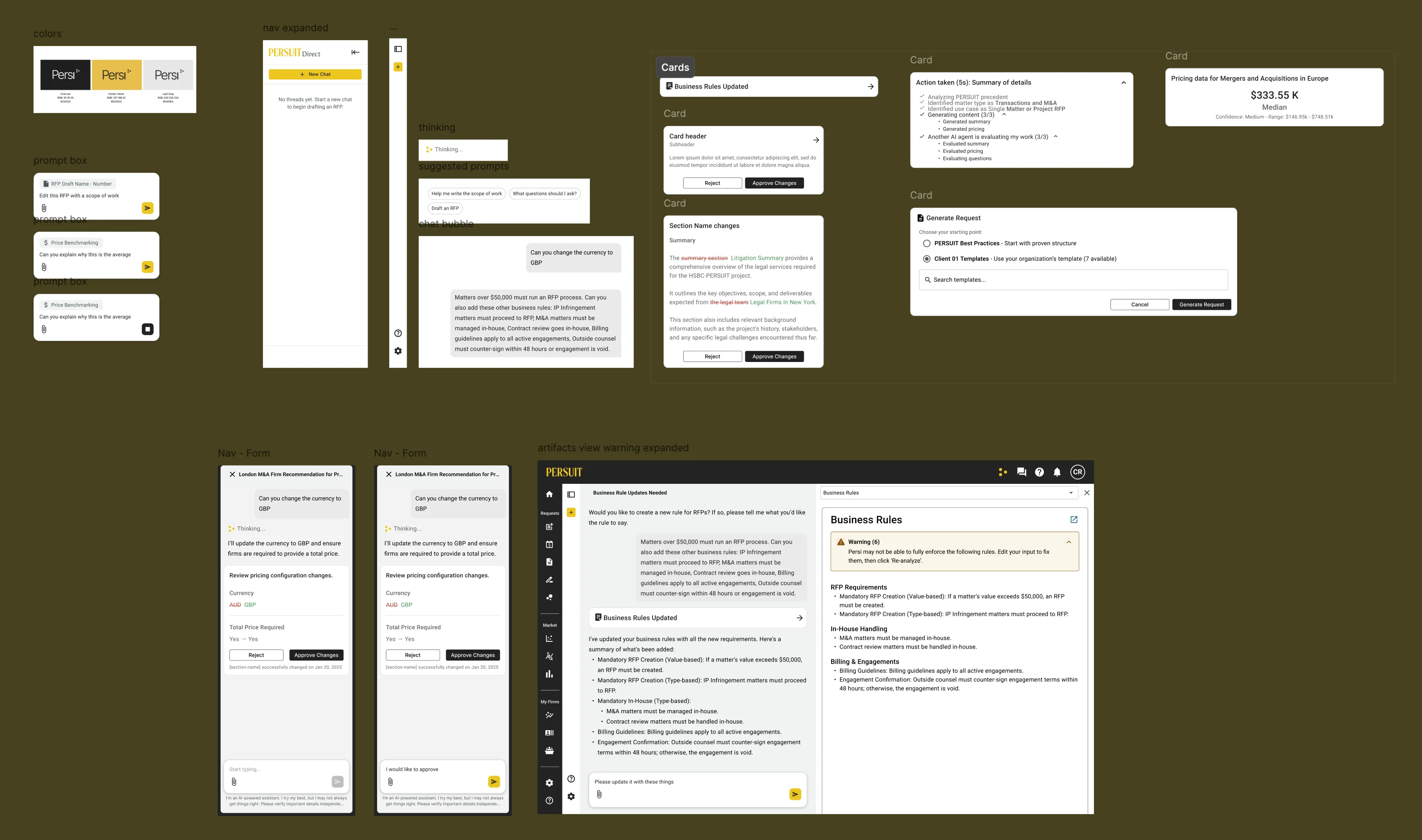
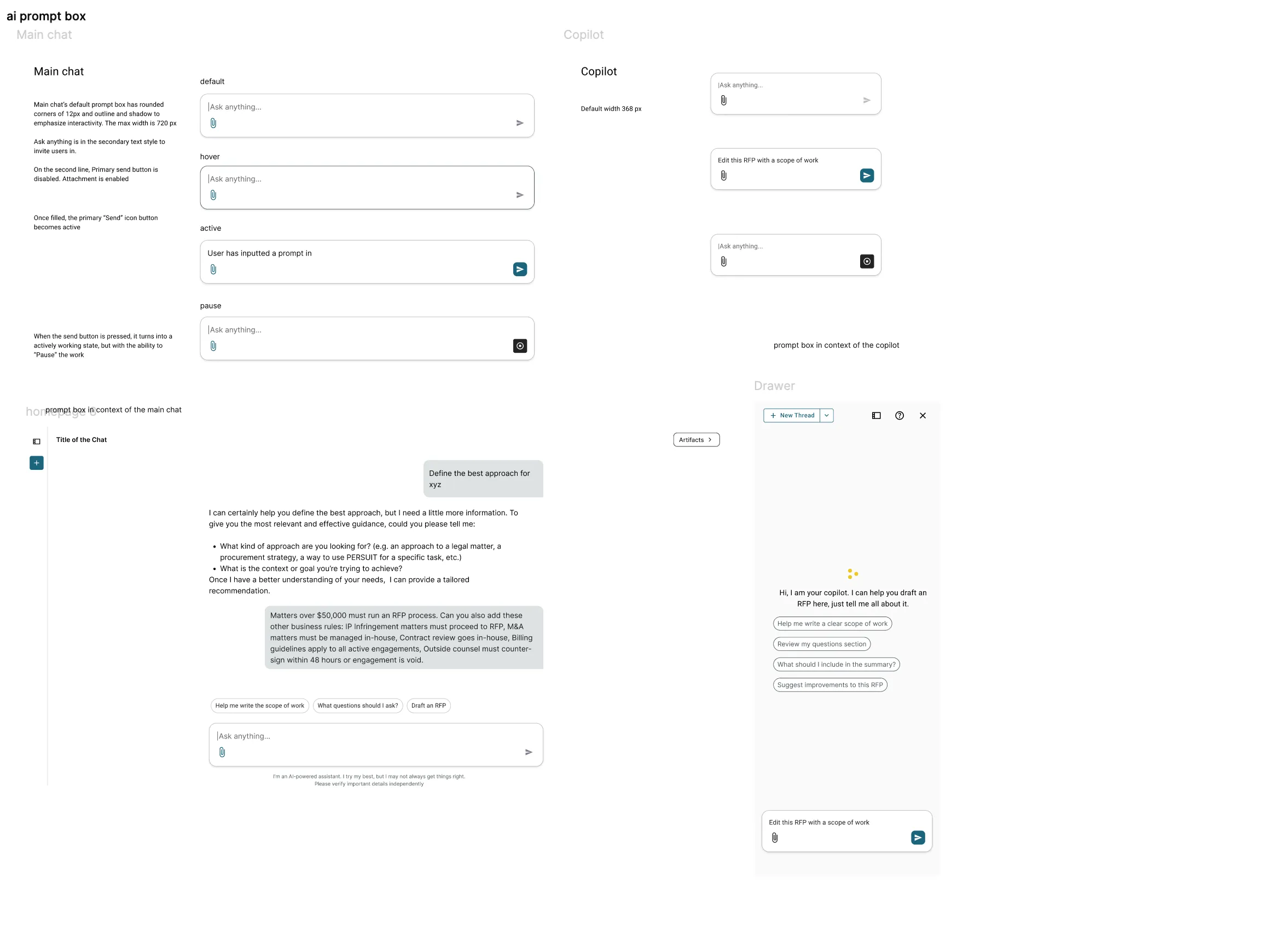
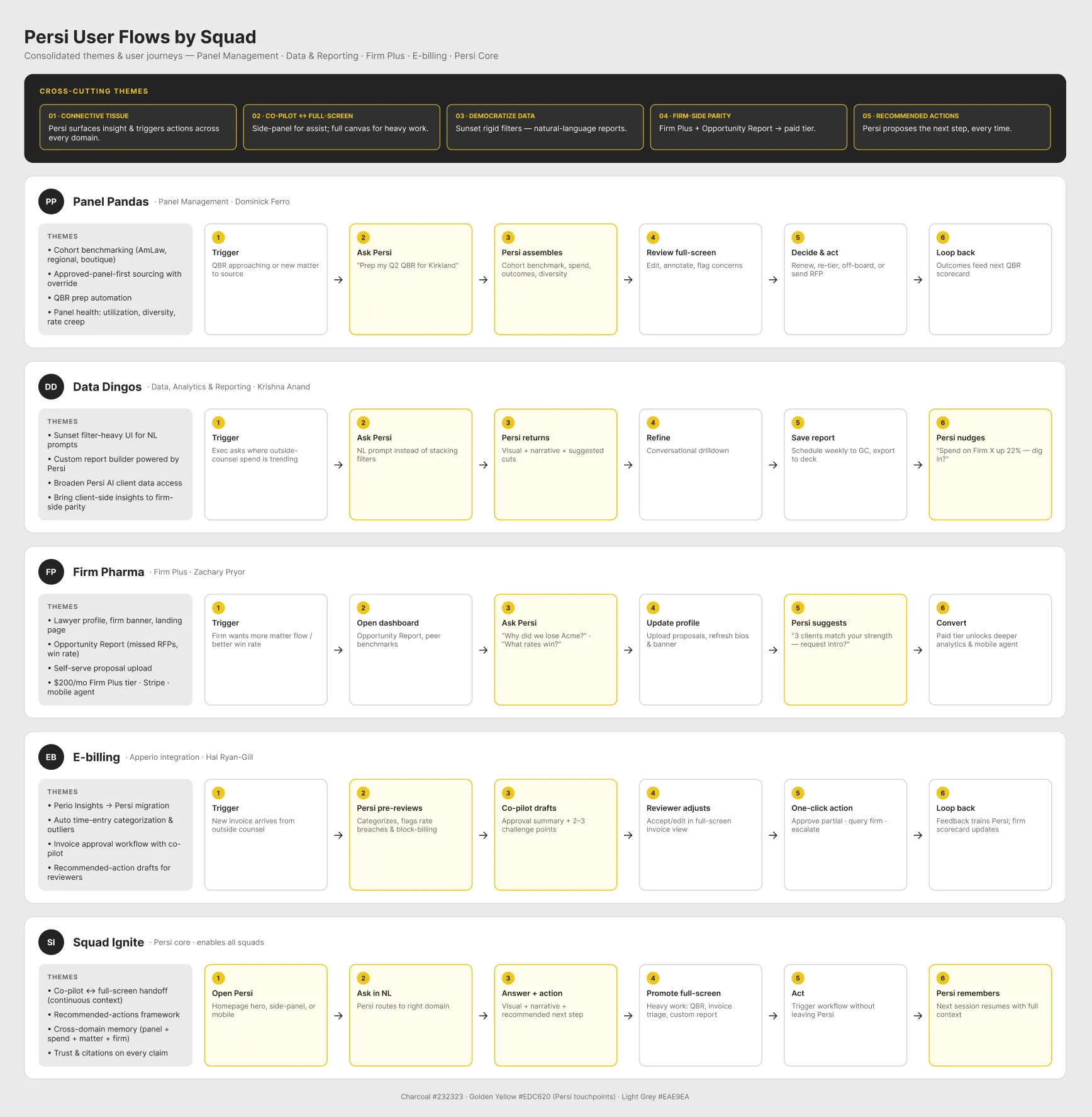
Worked across every squad’s use cases — matter intake, governance approvals, e-billing status. Patterns that hold for an invoice check fall apart on a governance approval, and you only see that with all of them in view.
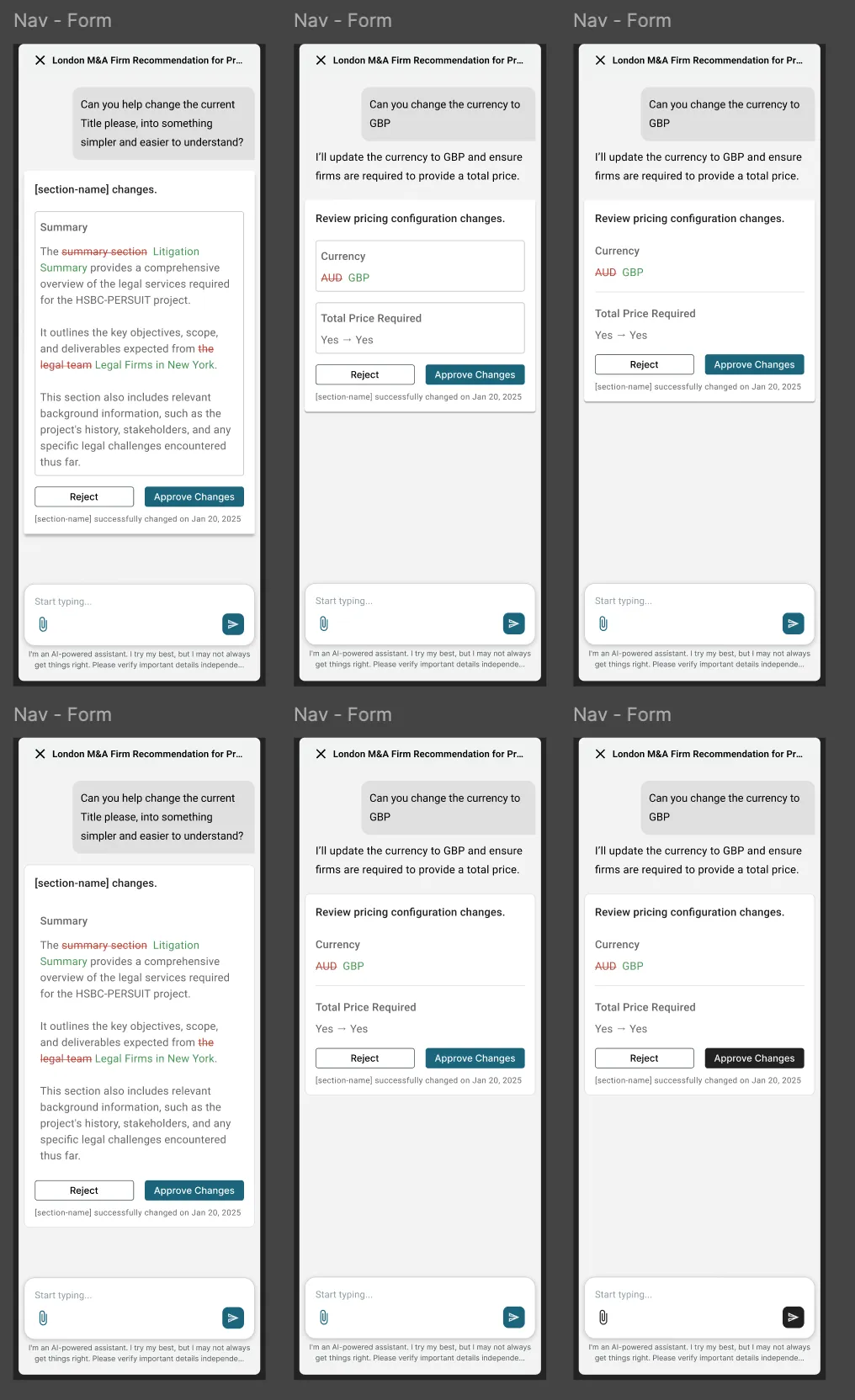
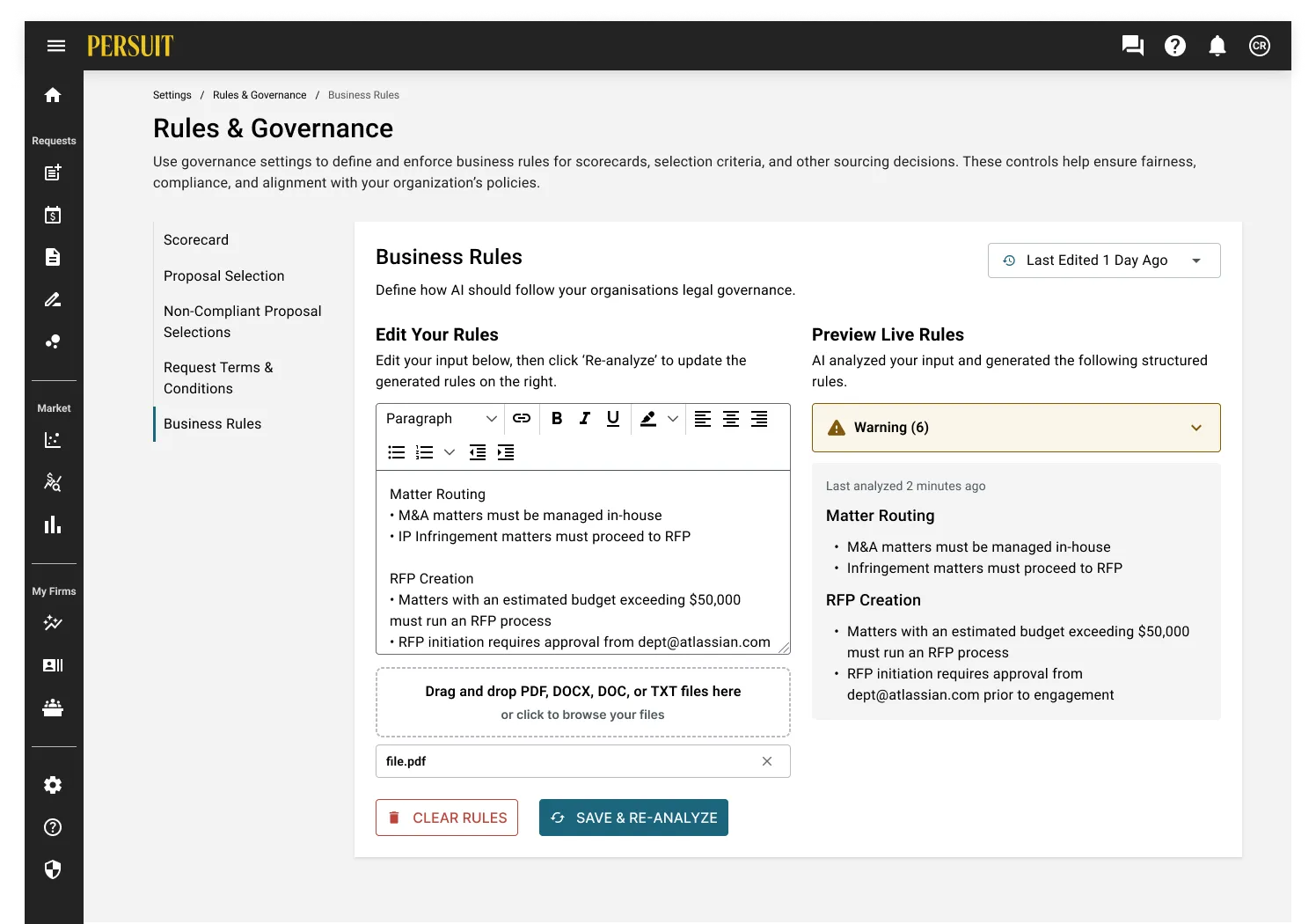
De-risking through content design
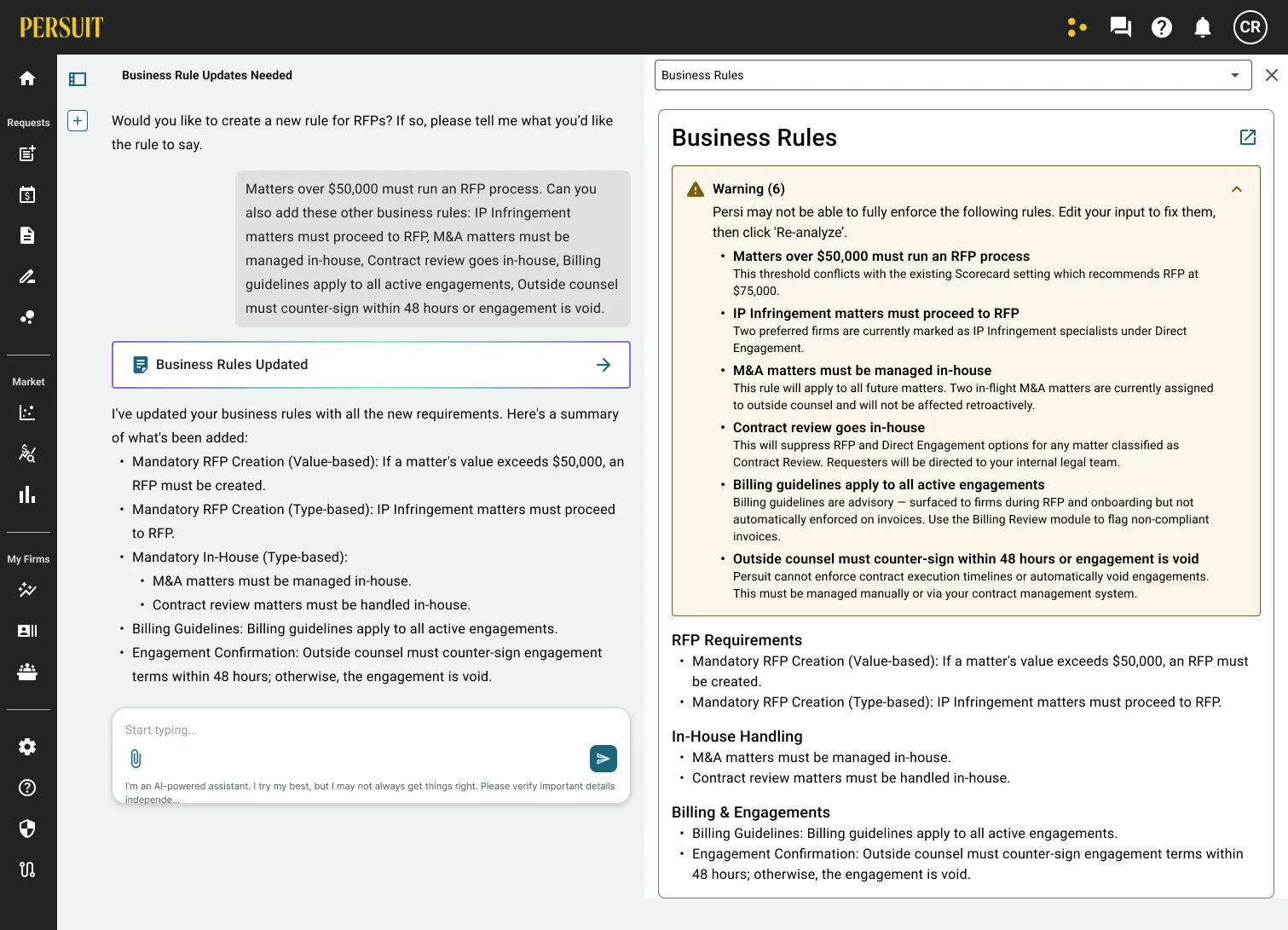
When an agent tells a general counsel that benchmark fees are €380K–€520K, the words around that number decide whether it gets acted on, ignored, or escalated. Content design is the trust surface.
Outcome
- 22 customers on the Persi beta program
- A deciding factor in renewing their contracts with PERSUIT
Research sessions with a subset showed they wanted benchmarking data faster — and a partner in the in-house versus outside-counsel decision, not a system that made it for them.
That validated the intervention line. The value wasn’t automating judgment. It was removing the work getting in the way of it.